- Laser PointersBy ColorBy PowerBy ApplicationBy Wavelength
- Laser Modules
- Laser Sights
- Laser Diodes
- Laser Goggles
- Other Lasers
- Accessories
- Company Information
- Home
- >>
- Blog & News
- >>
- Development of laser presentation technology
Development of laser presentation technology
Published by David - December 28, 2025
Views: 553
Since the advent of the laser in the early 1960s, laser technology has developed rapidly and is widely used. Laser presentation is a new technological development in amusement, entertainment, and large-screen displays. It is a new type of photoelectric array that integrates laser, precision optical machine, photoelectric control, image processing, and multimedia.
The laser presentation has the following features:
(1) It is a projection imaging method that enables the display of large screens.
(2) Vivid colors with high contrast (100:1).
(3) special effects, Spatial beam effect, and beam interference effect.
(4) Laser effects and visual signals are digitized and directly programmed by the computer; (5) It is a vectorized graphic mode written by "light pen."
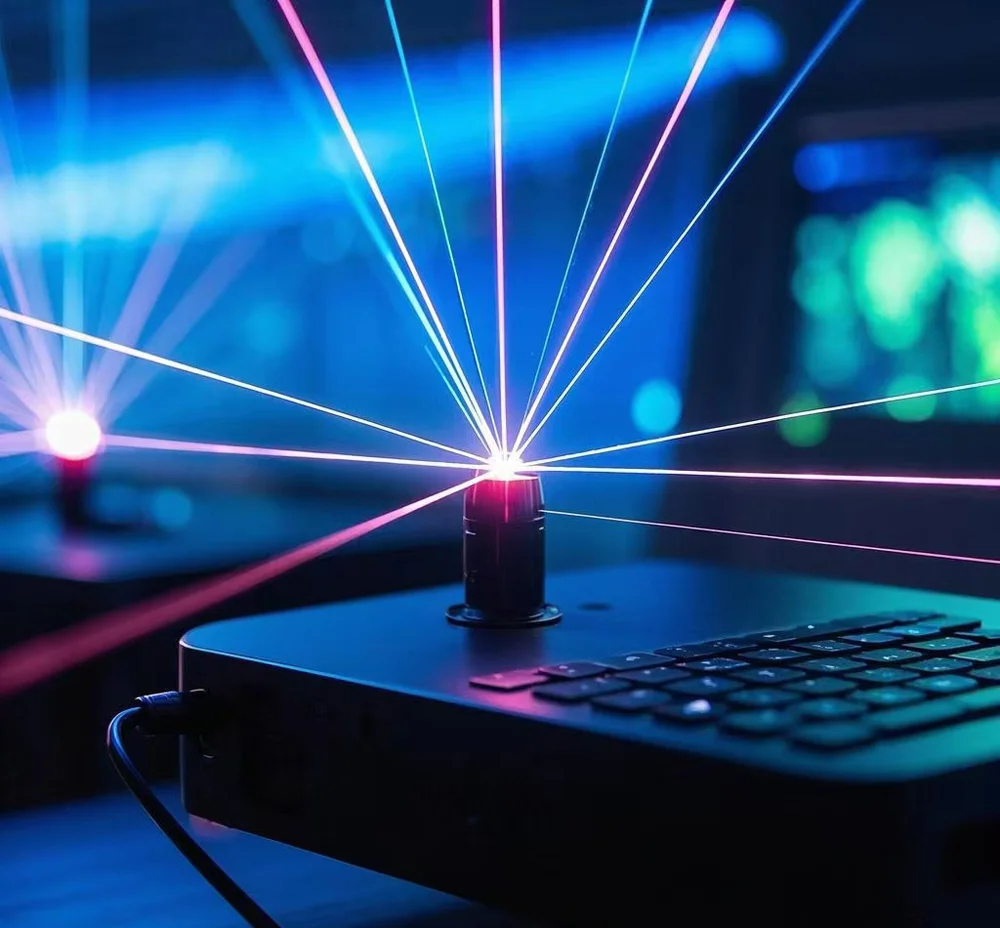
The laser presentation system consists mainly of lasers, color mixing and modulation components, laser scanning projectors, computer controllers, and multimedia elements. Under the control of the computer, the laser beam is projected onto space or screen through a color synthesis modulator and a laser scanner to demonstrate various special spatial beam effects and incredible static, dynamic, and three-dimensional graphic images. The program and visual representations of the performance are designed by computer software according to the user's requirements.
Laser pointers
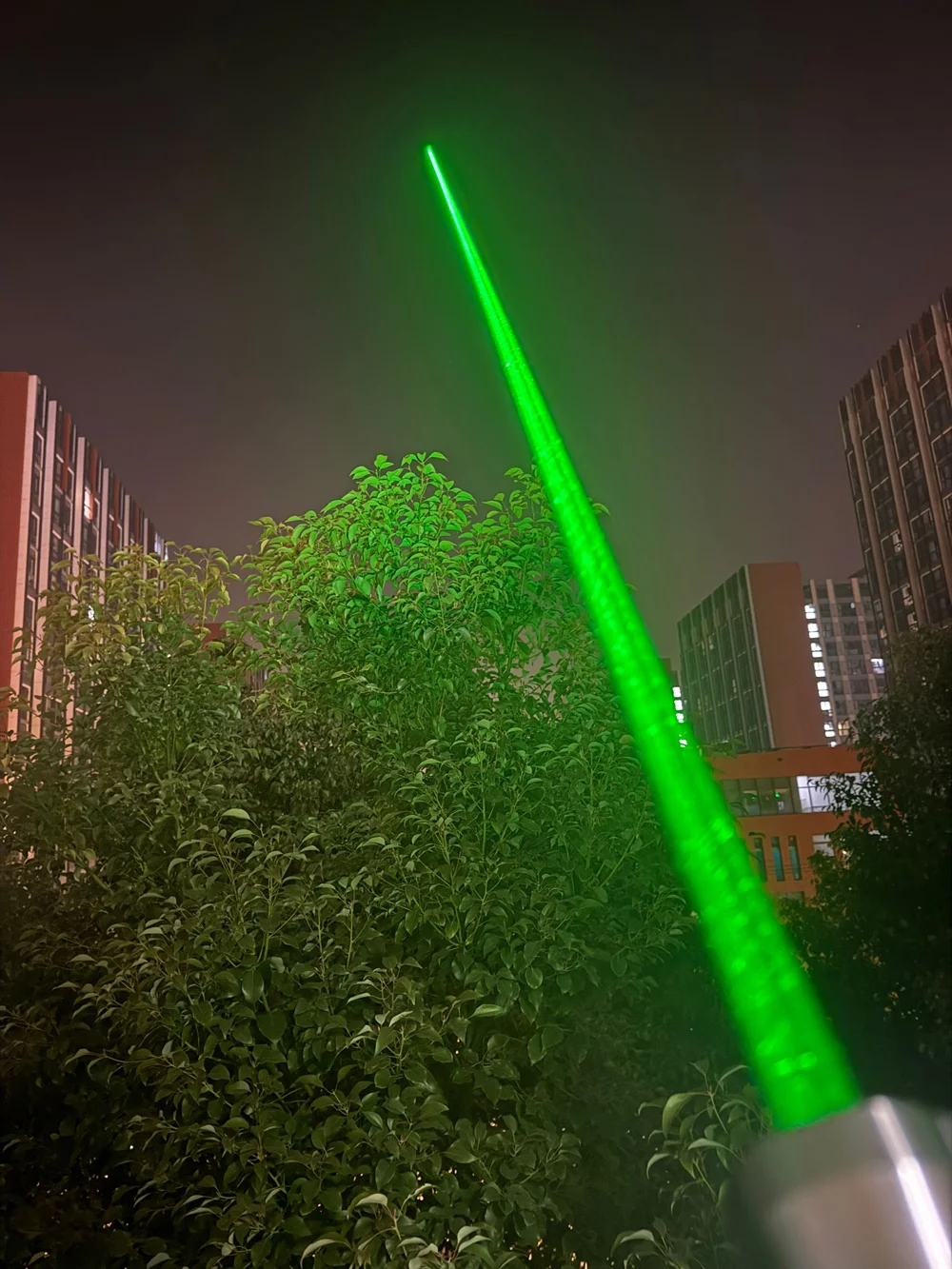
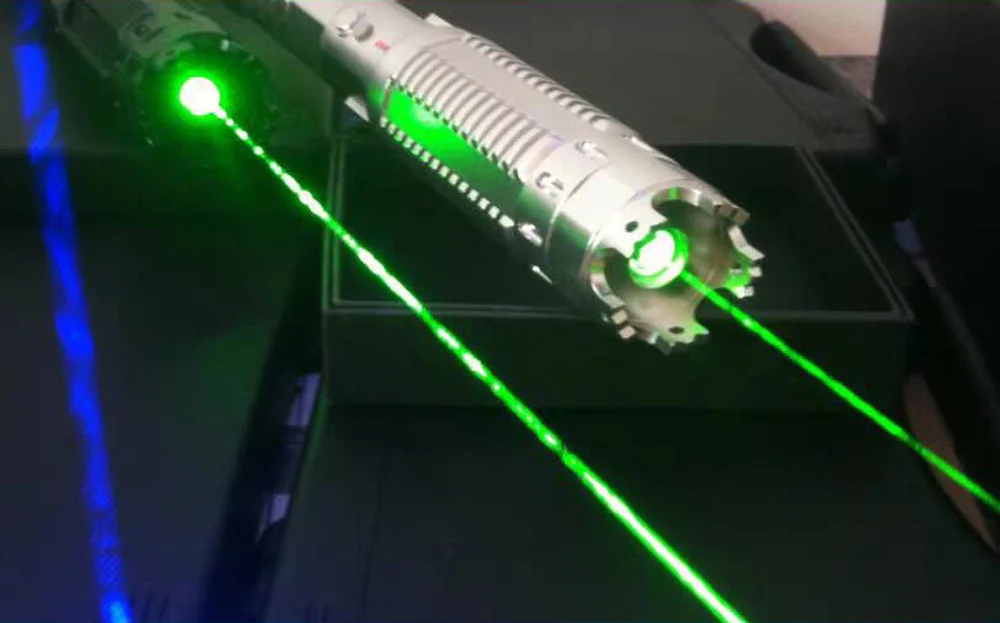
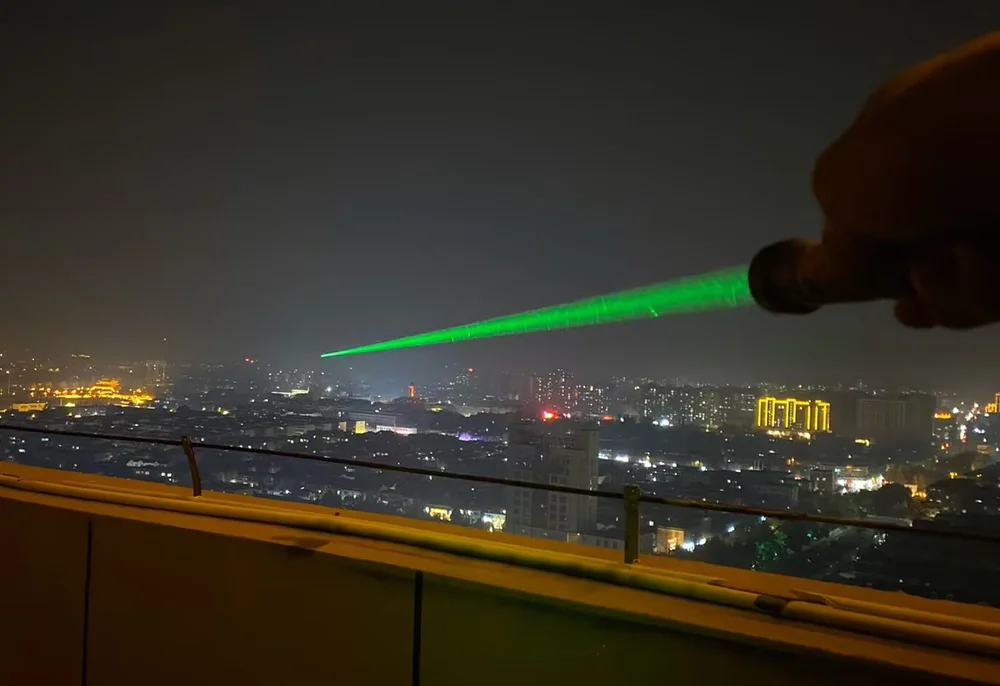
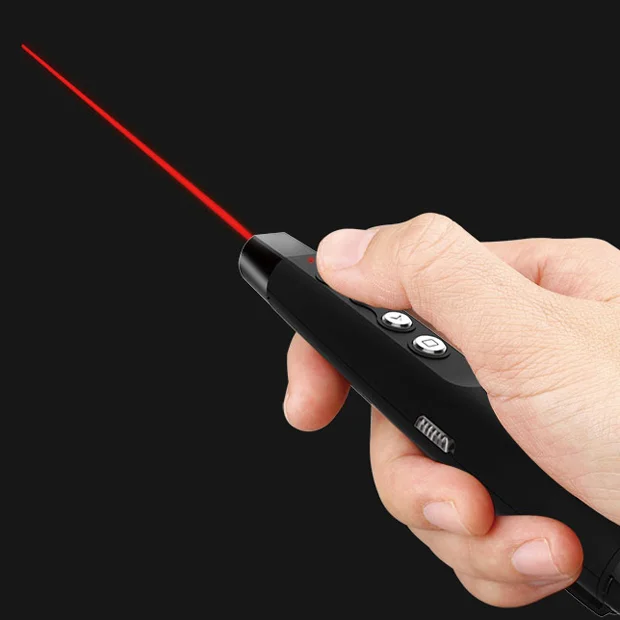
Laser pointers are a key component of laser presentation systems. The laser used depends on the size of the application, the ambient brightness, and the color effect of the presentation. It can be divided into low power (<1 W) and high power (1 ~ 30W), monochrome (red or blue, green), and color (red, green, blue). Current low-power laser pointers include red xenon-krypton lasers (power <50 mW), air-cooled argon ions (blue, green), or argon-helium gas color lasers (power: <1 W). For high-power systems, a water-cooled argon ion (blue, green) laser (power: 3.5 -30 W) and an argon-helium gas color laser (power: 3.5 - 20 W) were used. In recent years, copper vapor (yellow, green), which operates at high repetition rates, has been used for laser beam performance.
With the development of laser technology, diode-pumped solid-state lasers are the new darling of laser presentation. It produces red, green, and blue lasers through nonlinear optical techniques (multiplier, sum, etc.). Compared with gas lasers, all-solid-state lasers are characterized by compact structure, low power consumption, high efficiency, no water cooling, and 220-volt power supply. Current continuous-wave green all-solid-state lasers have been commercialized, such as solid-chip microchip lasers (power: <100 mW) and high-power all-solids frequency-doubled lasers (power: <10 W). However, it will take some time to commercialize high-power continuous-wave blue and red all-solid-state laser devices. Besides, low-power red lasers have begun to be used in simple laser art presentations.
Laser scanning
The laser scanner consists of an X-Y optical scanning head, an electronically driven amplifier, and an optical reflective lens. It is similar to the deviation of an electron beam in a cathode ray tube, except that the photon is not a charged particle and cannot be controlled by a magnetic field or an electric field like an electron beam. Therefore, an optical scanning head commonly used for laser art presentations is a galvanometer-type scanning head. The galvanometer scanning head is divided into open and closed loops. The former is often used for simple laser beam presentations, while the latter is widely used for laser graphics presentations. The scanning head is characterized by a large deflection angle of up to 80 degrees. Still, compared to other optical deflection systems (polygonal mirrors and acousto-optic deflectors), its scanning frequency is limited due to foldback and acceleration time. In the laser presentation system, the waveform of the optical scan is a vector scan; the system's scanning speed determines the laser pattern's stability. In recent years, high-speed scanners have been developed with scan speeds of up to 50,000 points per second, enabling the presentation of complex laser animations.
There are different types of laser scanners, optical platform type: integrated projector, laser, and other optoelectronic components on an optical platform; separate type: transmission with fiber optic cable, flexible installation; open-loop: for spatial beam Effect; Closed-loop: Demonstrates complex spatial beam effects and graphic animation.
Laser color controller
The laser color controller is used to control the color of the color laser. In laser presentation systems, simple color control uses the so-called "color fit," a color filter [6]. The three color filters are filtered in three colors: red, green, and blue. By combining the three color filters, seven different colors can be produced. This color controller can only display a single color for each graphic. Another control method uses three acousto-optic modulators to modulate three different color beams separately. This is called the RGB method. The latest laser color controller is a multi-color acoustic-optic modulator (PCAOM) [2] [5] that can simultaneously control eight different laser wavelengths and display millions of colors. Like the RGB controller, it can display different colors in one graphic. Its superiority is that it requires only one modulator, is simple to install, and has a high luminous flux.
Laser computer controller
The laser computer controller is the central unit of the laser presentation system for controlling laser scanners, color synthesizers, lasers, and other peripherals. In addition to control, another important feature is the design and programming of laser presentations. The most straightforward controller uses an EPROM chip to store laser presentations, mainly for laser beam performance. The latest computer controller is an industrial computer-based multi-function system with four independent XY graphic output channels, which can simultaneously control four independent optical scanning projectors, demonstrating completely different laser programs through the optical splitter. Fiber optic cable can control any number of scanning projectors. This controller has powerful programming capabilities to program 2D and 3D laser animations.
The latest laser presentation system not only controls the laser scanner color synthesis modulator but also has the following functions:
(1) The RS232 interface controls the power of the laser, and the laser system is automatically turned off when the laser operating parameters (current, voltage, water flow, water temperature, etc.) are abnormal.
(2) Four working modes: "Auto Disc Presentation": Write the computer-programmed laser show program (beam effect and laser animation) software to the disc, and the system will automatically demonstrate the laser show program stored on the digital disc. "Dynamic Writing": Instantly input text through a computer keyboard and store it on the music piano. This way, the input text is combined with the laser presentation program to perform at any time. "Interactive Control": The laser effects and graphics are stored on the music keys via the MIDI interface, and the operator can control the laser show as you like. "Music sound control performance": The laser show is synchronized with the music played; that is, the accent of the music controls the laser performance.
(3) Laser presentation Multimedia System: The new laser computer has multiple standard interfaces: SMPTE, DMX, SCSI, MIDI, etc. It not only controls the laser presentation system but also controls its peripheral equipment such as lighting/audio, water curtain/fountain, slide projection, video playback, movie machine, vocal equipment, hood/fan, screen/curtain, etc. Using the laser computer's clock system, it can be timed on and off and combined with its control functions to program the presentation run timing of the laser multimedia system.
(4) System network control: Install MODEM. Through the communication network, the laser computer workstation of the laser presentation center can remotely monitor fault diagnosis and laser presentation software of the working state of the laser presentation system in the field.
In recent years, laser presentation software technology has made significant progress. Although computer graphics software changes with each passing day, it is a pity that these software (such as CAD) cannot be used for laser presentations. The reason is that the beam cannot be scanned and controlled as fast as the electron beam in the picture tube. In addition, the scanned image point of the laser on the screen cannot produce an afterglow like the fluorescent screen on the picture tube; it will disappear instantly, which requires the use of new computer algorithms to design the laser presentation software.
-

Blog Categories
-

Popular Articles
-
Related Products