- Laser PointersBy ColorBy PowerBy ApplicationBy Wavelength
- Laser Modules
- Laser Sights
- Laser Diodes
- Laser Goggles
- Other Lasers
- Accessories
- Company Information
- Home
- >>
- Blog & News
- >>
- Tips for choosing astronomy laser pointers
Tips for choosing astronomy laser pointers
Published by David - May 16, 2026
Views: 355
You're in the right place if you're looking for a good laser pointer for astronomy. Finding the right laser pointer can be confusing, and knowing where to start can be difficult. I have some experience that I'll impart to help you decide on the best laser pointer for astronomy.
Getting the right pointer can be overwhelming – if you don't know what you're doing. Whether you're a keen astronomer looking to add a laser pointer to your arsenal or a beginner, I'll give you my honest opinion on what a solid choice would be for you.
Criteria to meet
I'm sure you're aware that many regulations have been applied in recent years that restrict the laser pointers that you can purchase.
While I prefer laser pointers that are relatively high in mW (milliwatts), it's no longer wise to recommend a laser pointer with high power output. Luckily for you, that doesn't mean to say that all astronomy laser pointers are now illegal to purchase and won't work correctly.
If you want a laser pointer visible in the night sky, I recommend two things. Firstly, opt for a green laser pointer. Green is the best color for vision, especially at night. Your eyes will be more responsive to a green laser pointer than another color.
The second is to try and get a 5mW laser pointer. This is the recommended higher laser power output you can currently get in the United States, and it's certainly enough for what we're trying to do here.
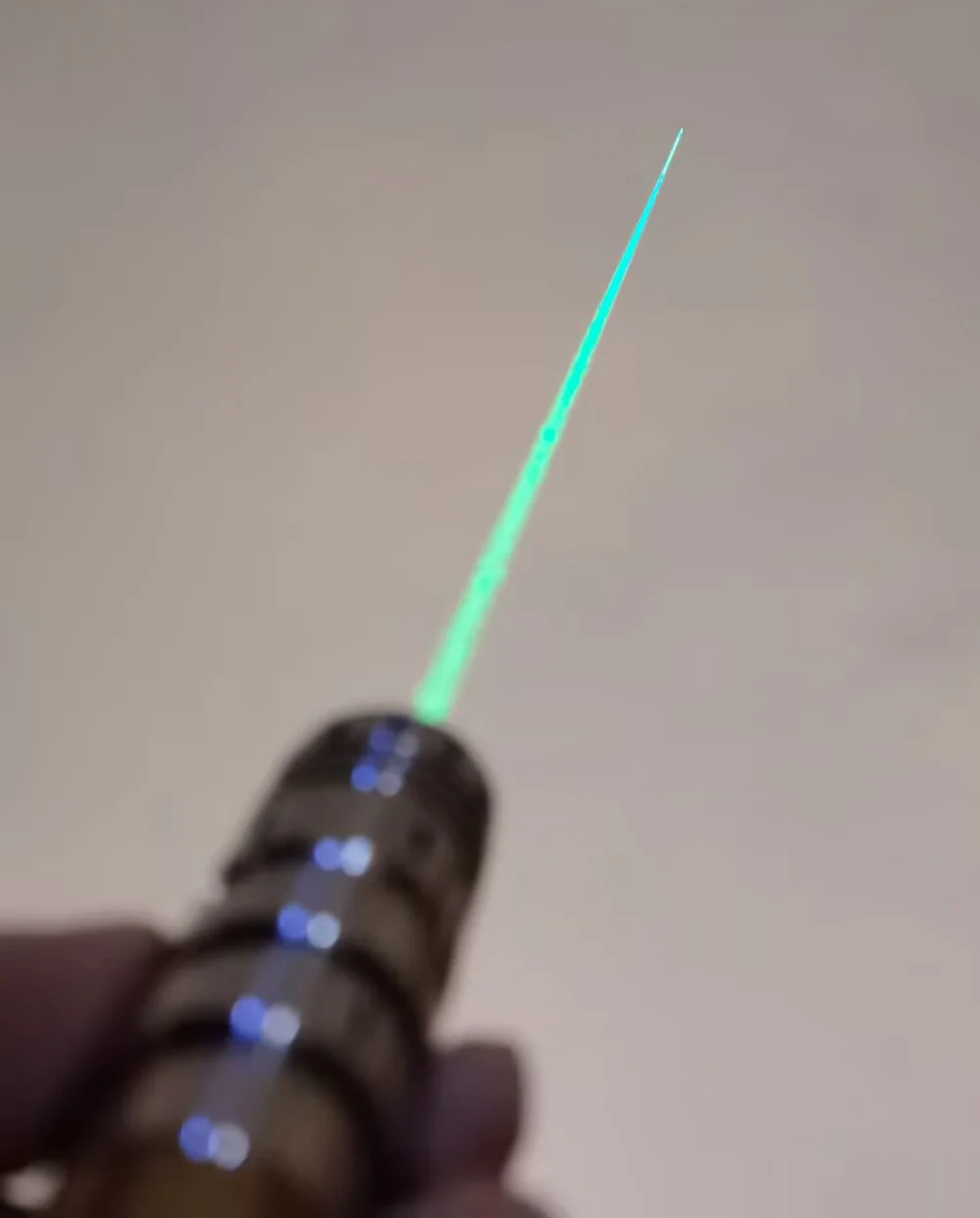
The Best Astronomy Laser Pointers
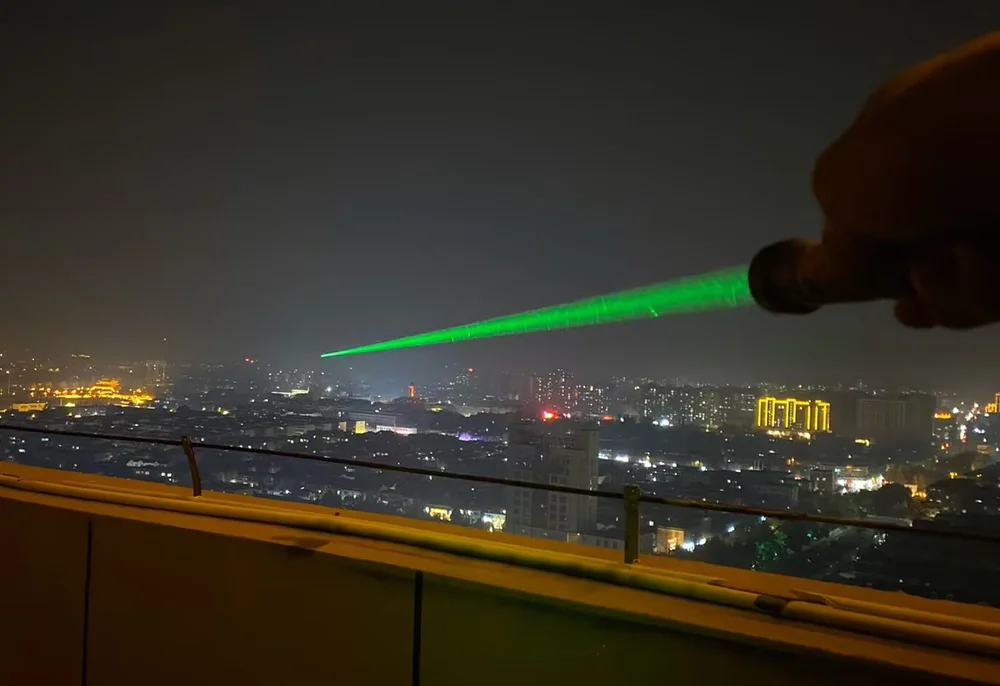
An important use for visible lasers is in the field of astronomy, mainly for star pointing. As lasers have the unique ability to emit a straight, highly visible laser beam clearly across the night sky, it can accurately point out stars and constellations. Oftentimes, you'll find lasers attached to telescopes that, when properly adjusted, can aid in guiding the telescope to the correct position.
Red or Green Laser for Astronomy
Many astronomers debate whether to use a green or red laser for stargazing. It is subjective, but I'll give my opinion on this a little (but keep in mind it is mine).
A green laser will always be more beneficial for astronomy. The simple reason for this is that green lasers are more visible to users than red lasers and other color lasers—that's it. However, we should consider other things that may help explain why the green laser is more popular than its competitors.
We often get this question, and the answer is simple: they're not nearly as visible! Red is close to the infrared spectrum, which means it has much less energy than colors on the visible spectrum. So when a red laser makes contact with dust in the air or water molecules, its power is absorbed instead of reflected.
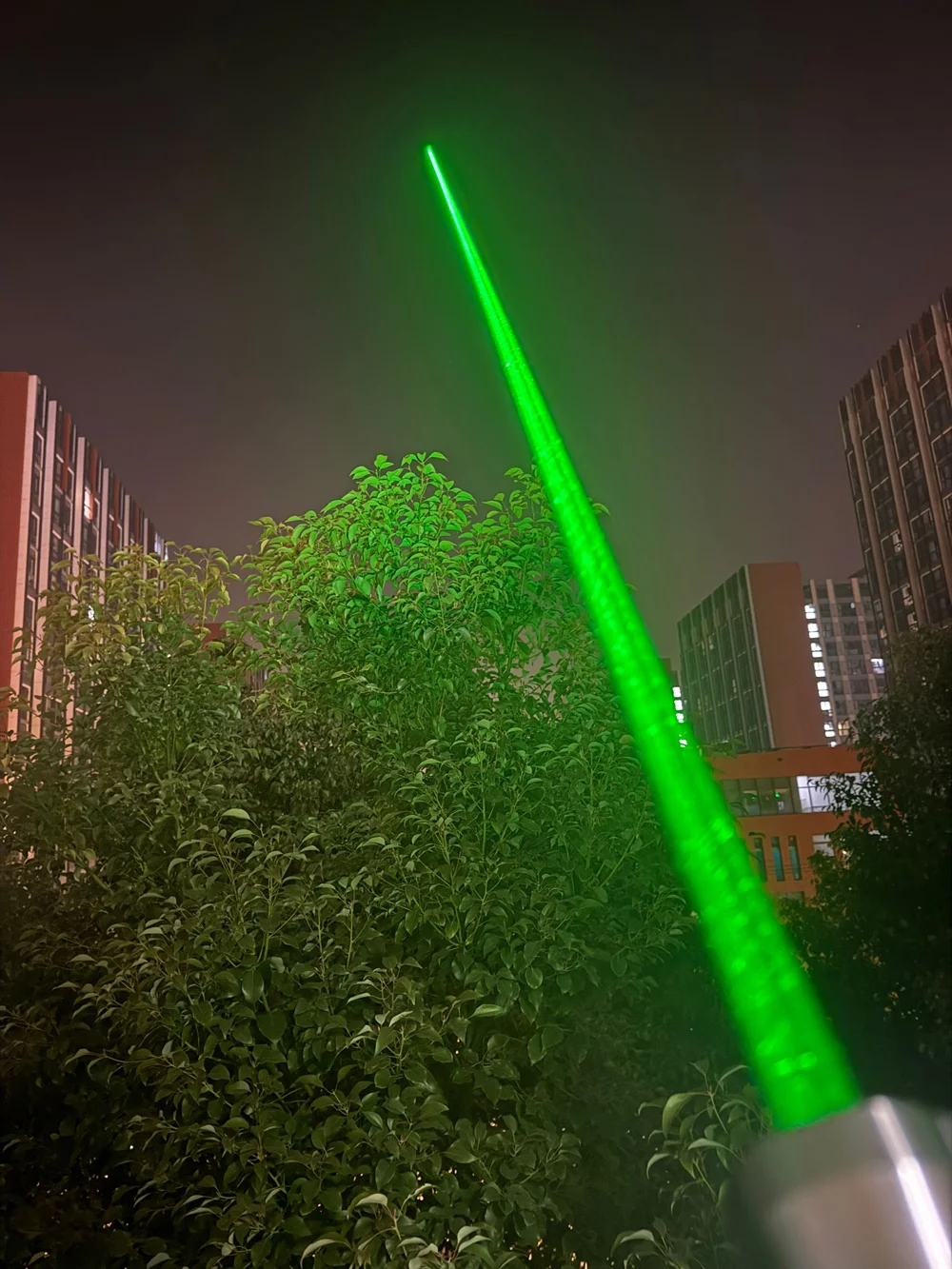
One of the main reasons green lasers are so popular, particularly high-powered handhelds, is the light-saberesque beam they emit. They have a slightly wider aperture than a simple pointer, and when the shaft makes contact with particles in the air or atmosphere, it's reflected; this is why the beam is so visible on a green laser.
Best Laser Color For Astronomy
The first topic I want to discuss is the color of the laser. This is very important, and you should know that green lasers are the brightest because our eyes are most sensitive to this color.
In darkness – I assume you'll be viewing stars in complete darkness – green is the brightest, followed by blue, red, and violet. This means that a green laser is most visible to your eyes and the most commonly used color of the laser pointer for astronomy.
Additionally, it requires less energy to produce the same laser brightness as other colors. We offer two types of green laser pointers: a 532nm and a 520nm version. While both are green, they operate very differently: the 532nm is a DPSS laser, and the 520nm version is a direct diode.
I won't discuss the differences in this article. Look at the laser guide to understand why the 520nm direct diode laser is the better choice. While green laser pointers are the most popular, red and blue lasers can also be used in astronomy.
My eyes are sensitive to blue in the darkness. However, due to the high cost of blue lasers in the past, they were seldom purchased for this purpose.
In recent years, however, the cost of blue lasers has decreased dramatically due to bulk production and new technologies, making blue lasers a new, refreshing choice for astronomy laser pointers. Lastly, let's touch upon red laser pointers. While not as bright, red lasers can also be used for astronomy as the laser beam can still be visible - though not as well as with a green laser pointer.
While a laser pointer can be helpful for astronomy, not every laser is suitable for this purpose. Many models are offered in various colors (wavelengths), power outputs, and prices. Which one do you need?
Laser Power Output
If you know about lasers, you'll understand that power output determines brightness; the higher the power, the brighter the laser will be. Of course, this is relative only to a specific wavelength.
For example, a green and red laser at the same power output will not have equal brightness. In this example, the green laser will be brighter. For some laser pointer vendors, they may recommend their highest-powered, most expensive laser pointer. Although you may "wow" your audience initially, a bright laser may disrupt your night vision by leaving your eyes adjusting every time the laser is turned on.
Hence, I never recommend anything too powerful. The key is to purchase a laser pointer that is bright enough to see the laser line but not so bright that your eyes refocus.
You should opt for a 5mW laser pointer in either green or blue, in my opinion.
What model and how much should I spend?
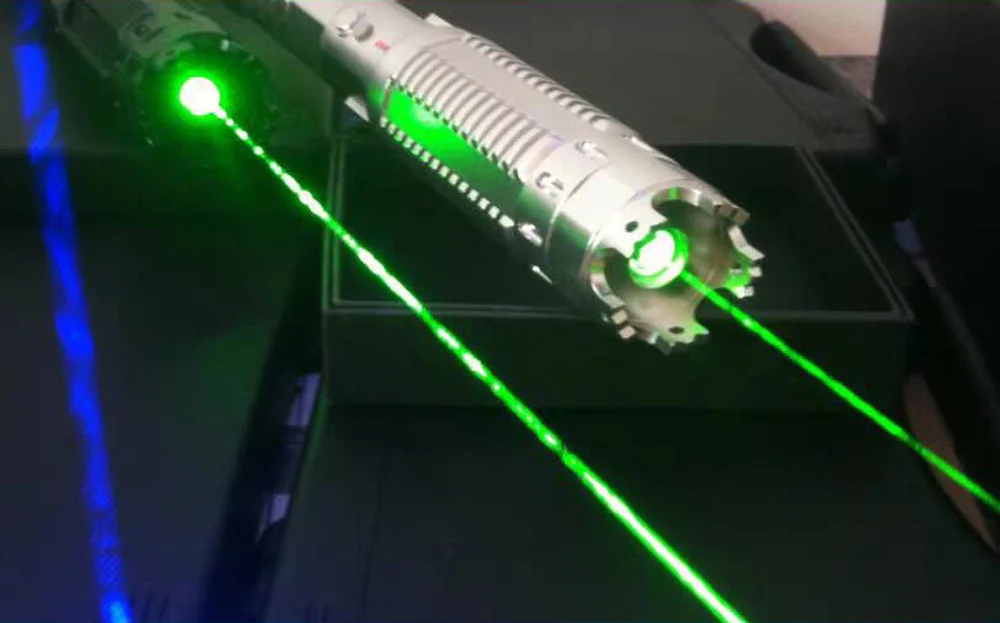
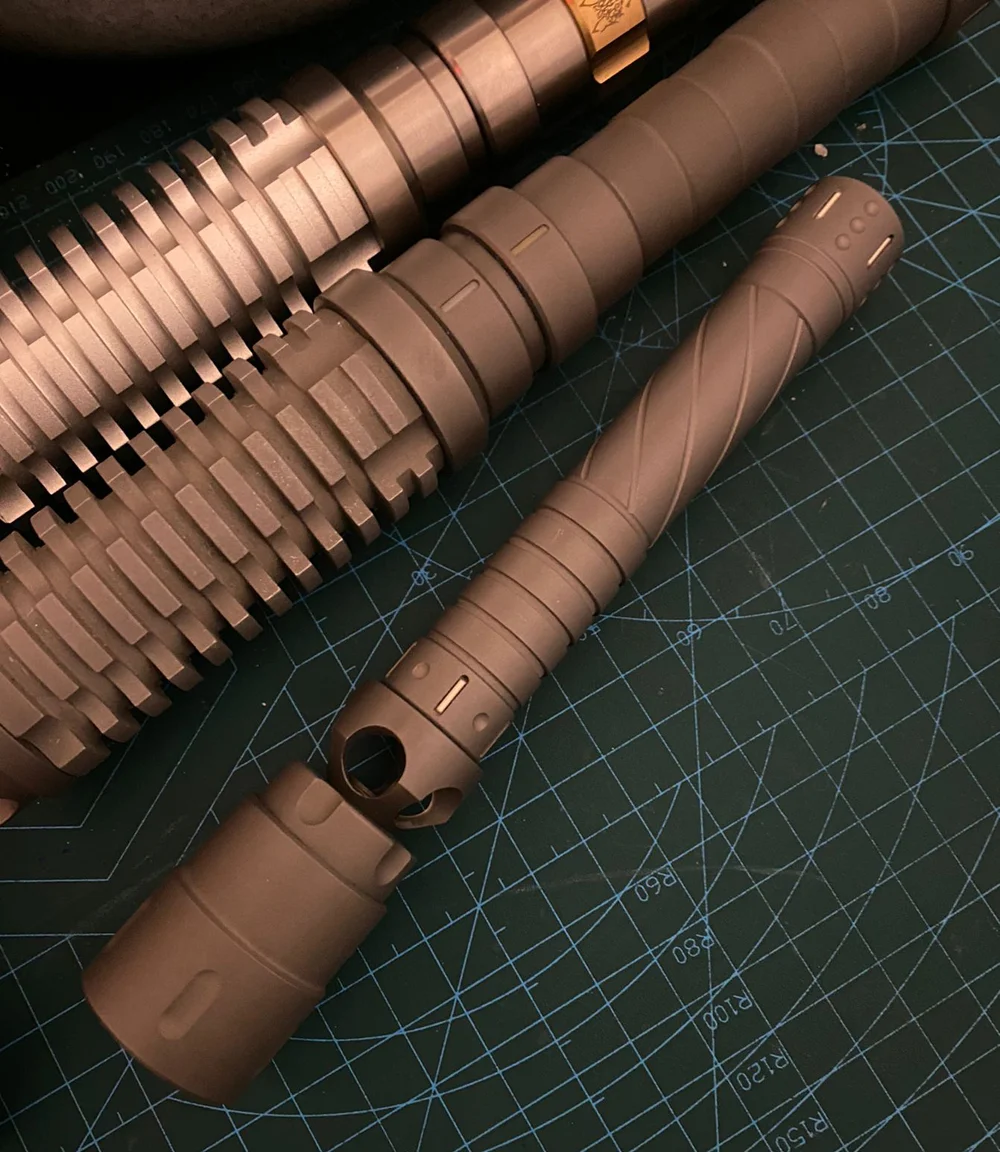
Laser pointers have evolved throughout the years and come in all shapes and sizes, from key chains to pen-styled lasers to more massive flashlight-styled lasers with many powers. Some laser pointers even replicate what a laser sabre (from Star Wars) looks like!
First, I don't recommend the large flashlight-style lasers mainly because they are heavy and inconvenient. These lasers barely fit in your pocket, so unless you want to hold them overnight, be our guest! Also, the larger lasers usually mean higher powers, which are generally too powerful for stargazing.
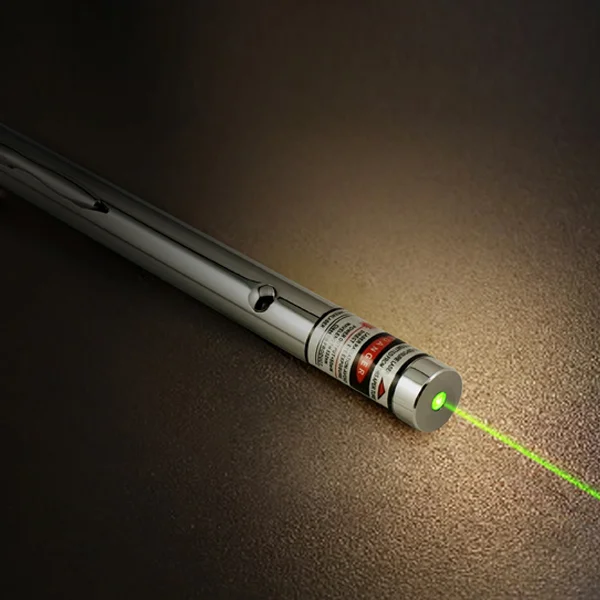
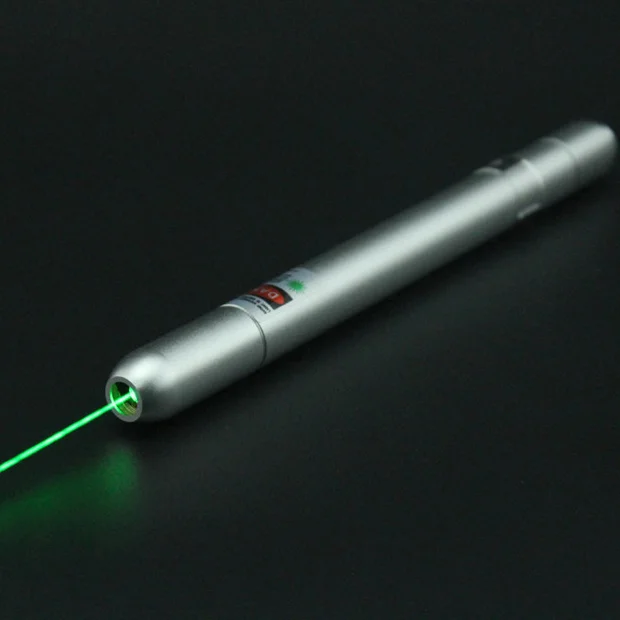
You should also avoid keychain lasers, usually weak in power and poorly made. For 532nm green laser pointers, always ask if the product has an IR filter. Generally speaking, you should look into pen-styled lasers or slightly larger ones. AAA batteries often power these and offer power ranges perfect for astronomy purposes.
If you intend to attach the laser pointer to a telescope, look into a laser pointer that makes it especially easy to do so (it should be in the guide). While pen-sized laser pointers were not meant for extended use (the average laser pointer should not be turned on for more than several minutes at a time), this is another condition you'll want—you need a laser pointer that stays on continuously.
Conclusion
You shouldn't just buy any laser pointer. Before purchasing a laser pointer for astronomy, you need to ensure that you:
1) Do proper research on which model you need.
2) Decide on the color you want (green or blue, but it's up to you).
3) Get the correct power output for your needs.
4) Opt for the right model.
If you do all of this correctly, you'll have a laser pointer that works well.
-

Blog Categories
-

Popular Articles
-
Related Products