- Laser PointersBy ColorBy PowerBy ApplicationBy Wavelength
- Laser Modules
- Laser Sights
- Laser Diodes
- Laser Goggles
- Other Lasers
- Accessories
- Company Information
- Home
- >>
- Blog & News
- >>
- How to Clean an Aquarium with Lasers
How to Clean an Aquarium with Lasers
Published by David - October 13, 2026
Views: 105
When you thought you'd heard it all, we're back with yet another unique use for lasers. No, this is not just another application of laser technology; this is a practical use for a high-powered laser-like our handheld or handheld series.
Recently, I had an inquiry from an aquarist and reef enthusiast looking to use lasers to control pest algae and other unwanted growths in their tanks. At first, I was surprised by the idea. I mean, I've owned a couple of small fish tanks in my day, and when it came time to clean the tank, I would remove the fish, empty the water, and scrub away the algae. It never seemed that complicated to me. I realize my beta fish bowls are a far less complex habitat than a saltwater aquarium with live coral reefs, but I never thought I'd be talking about high-powered lasers and live coral reefs in the same sentence.
So, what exactly can you do with a laser and a saltwater/reef aquarium? A lot, it seems. High-powered lasers are ideal for eradicating marine aquaria pests. Some organisms they're great at eliminating include aiptasia / mojo (see video below), blue & green algae (including biopsies and valonia), xenia, GSP, and pretty much any other invasive pest you want to be zapped. Handheld lasers are even capable of killing predatory crabs and vermetid snails!
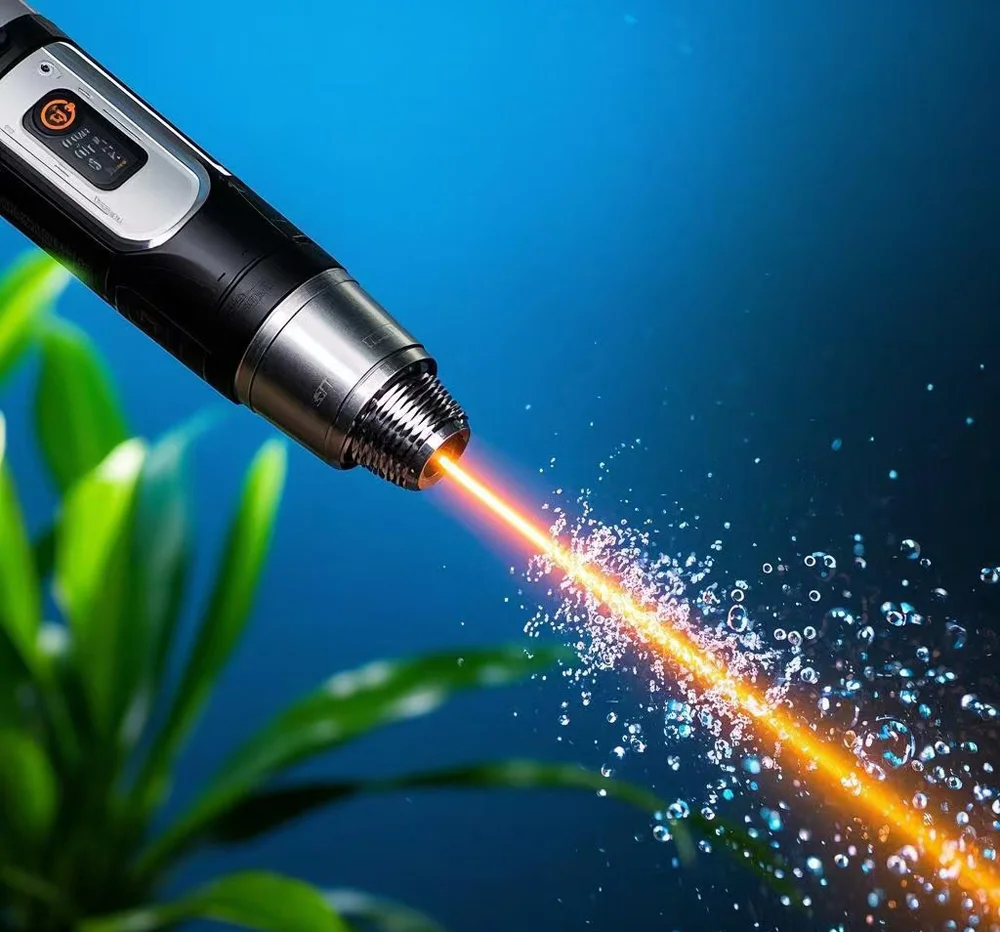
So, how do I keep my aquarium clean?
Before you run down to your local store and purchase a laser pointer, make sure you know what you're getting into and what you need to effectively exterminate your unwanted aquatic guests.
First, you won't have any luck with a cheap laser pointer. A 1W+ laser would be the perfect choice.
Second, you'll need eye protection. Have a look here at some of the best laser safety glasses around. If you decide to go through with this, you need to make sure you have a set of safety glasses on hand for you and anyone else assisting you with this task.
On the same note, please remove your fish from the tank! Any slight reflection will render them blind almost instantly.
Alright, so let's say you've got your high-powered laser, and your aquarium desperately needs some serious pest policing. What do you do now? In theory, it should be pretty straightforward. Think of the laser as a weed-whacker or edger for your lawn; precision and patience are of the essence.
Unless you've got special glasses for your fish, you'll need to remove them from the tank first. Once you've removed your livestock from the tank you're cleaning, you must first identify where your aiptasia, algae, xenia, or whatever you're zapping is living. It might be easier to do this without the glasses on. Once you've identified the tank squatters, put those glasses on and proceed cautiously. Take your time; you don't want to damage other living organisms.
Techniques to use
I found a thread on a forum and a highly detailed account of a user cleaning his tank with an 1800mw laser pointer. Someone made some great points and gave some solid advice for a first-timer.
1) For starters, you need to take care when shining the laser through the glass or acrylic tank. A perpendicular angle is preferred, as it will avoid stray reflections. It's also best practice to wear long sleeves and gloves to avoid burning your hands or skin.
2) Make sure your tank dwellers are safe! Remove them if possible. If you really want to get fancy, get yourself some laser safety glasses and sanction them off while you clean certain parts of the tank.
3) Do your best to keep water movement to a minimum. If possible, don't bump the tank or cause the water to move in any way. Movement increases cooling and decreases the effect of your laser on whatever you're zapping.
4) Keep a second pair of laser safety glasses on hand for your helper or curious friend. If you don't have a second pair, lock the door, and don't let anyone in while you're cleaning! Safety first, then teamwork.
Effectiveness scale
Depending on the type of organisms that fill your tank, you'll want to consider whether a laser will be effective. Here's a list of what a laser can be most effective against.
Aiptasia: Super effective. Within a few seconds, you'll hear the aiptasia sizzle and boil. You'll then hear a slight "pop," and they'll explode.
Green Star Polyps: Roasted within seconds. Very effective.
Valonia: inconclusive. While the laser appears to cut through both sides of the Valonia bubble, it will take some time to determine whether they're actually killed.
Algae: everything hit with the laser burns, sizzles, and pops. It might take some time to kill all the algae, but it stands no chance against the power of lasers.
Cyano: Easily eliminated. One pass with the laser will destroy all cyano.
-

Blog Categories
-

Popular Articles
-
Related Products